About Us
Who We Are
Communities In Schools of Michigan is part of the national Communities In Schools network, working to ensure that every student has what they need to realize their potential in school and beyond.
Operating directly inside 57 schools across Michigan, we connect students to caring adults, educational resources, and community support systems that help them see, confront, and overcome the barriers that stand between them and a brighter future.
Together, we build a powerful change movement made up of peers, students, and alumni committed to building an equitable path to education for future generations.
Join us in creating lasting change for Michigan students.
What We Do: Integrated Student Supports
At Communities In Schools of Michigan, our Student Support Coordinators work inside schools and alongside volunteers, partners, and the local community to ensure students get the support they need—both in and out of the classroom. By offering a range of services and tailoring support to individual needs, we’re able to serve the whole school while focusing extra attention on students facing the greatest challenges.
Here’s how we help:
Academic Assistance
Our student support coordinators connect students with tutors, create quiet spaces to study, and make sure they have what they need to stay on track academically. We also guide students who are planning for college or looking ahead to their careers.
Community & Service Learning
We provide opportunities for students to engage in real-world experiences through volunteer work, mentoring, and service projects—helping them build connections and see the impact they can have on their community.
Basic Needs
It’s hard to learn when basic needs go unmet. Whether it’s food, clothing, hygiene products, or access to transportation, we make sure students and their families have the essentials—so students can focus on learning.
College & Career Prep
From navigating college applications and scholarships to finding internships, exploring career paths, and practicing interview skills, we help students feel confident and prepared for life after graduation.
How We Do It: The CIS Model: Integrated Student Supports
1.
3.
Discover Needs
Through conversations with teachers and students—alongside robust data analysis—CIS student support coordinators identify the biggest challenges facing schools and individual students.
Plan Together
CIS student support coordinators work with school administrators and educators to develop a plan that prioritizes the various academic and non-academic supports that meet students' needs.
Integrate Supports
CIS Student support coordinators work with school teams every day to integrate the supports identified in the planning process. That’s how CIS becomes an integral part of a school community and students’ lives.
2.
4.
Monitor, Evaluate, and Adjust
CIS student support coordinators work with schools to continuously monitor student and school progress, using the data and feedback to optimize results. Continuous assessment of partners and student supports helps us increase our impact.


Three Tiers of Support
The CIS evidence-based model is a whole-school approach to deliver tiered supports that best meet the needs of the school, including those of individual students.
We provide these supports in three different tiers.
-
Whole-School Level
Widely available services designed to foster a positive school climate and address school-level risk factors.
-
Targeted Services
Targeted services which are typically provided in a group setting to students with a common need.
-
Individualized Services
Intensive, individualized services are typically provided in a one-on-one setting to students with highly specific needs.
Principles in Action
Our Guiding Theory
Students exist within interconnected systems, including school, family, community, and their own organizations. Our work transcends immediate needs. We intentionally strengthen the following systems to create lasting pathways for success:
Schools: Creating learning environments where every student thrives
Families: Serving as powerful advocates for their children's success
Communities: Strengthening communities through authentic collaboration and partnership
CIS Organizations: Modeling shared principles in our culture, operations, and partnerships.
Principles in Action
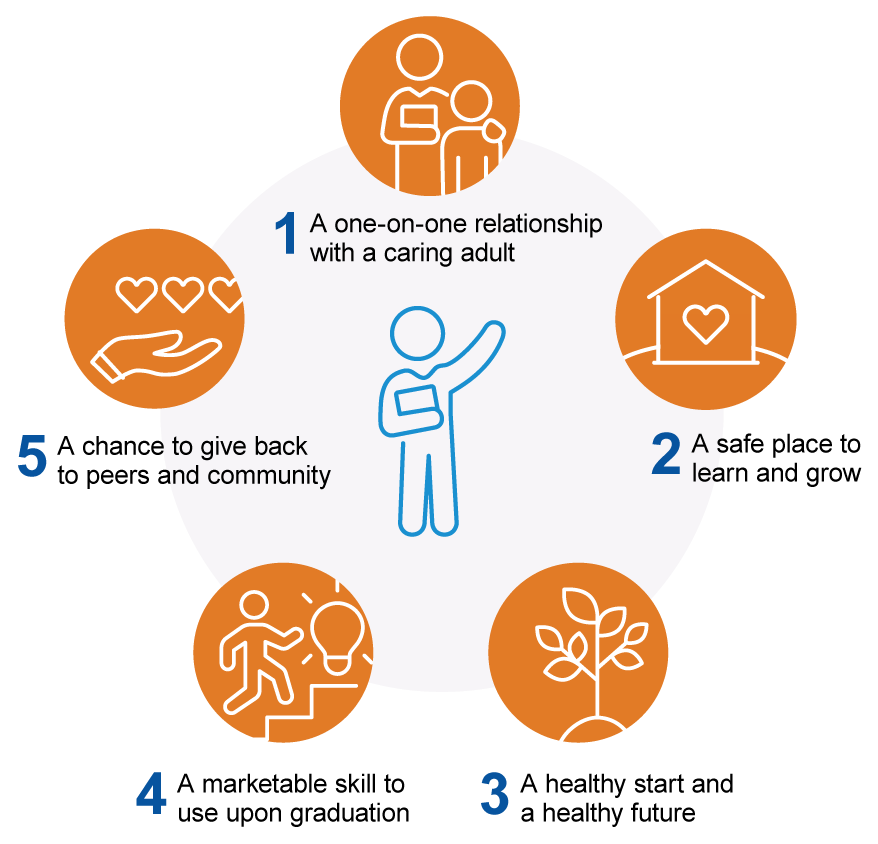
Grounded in Bill Milliken’s Five Basic Principles, Principles in Action reflects a core belief that has guided CIS from the beginning. Today, we are expanding that belief to more fully recognize the systems that shape a student’s success—schools, families, communities, and the organizations that support them. Together, our shared principles affirm that every student—and every system that surrounds them—needs and deserves:
A Caring Adult - Every student and every adult connected to them benefits from genuine, consistent relationships with caring adults. These connections—rooted in respect and understanding—form the foundation for connection and growth.
A Safe Place - Students, families, and staff deserve to feel safe, respected, and supported in every dimension: physical, emotional, relational, and cultural. CIS plays a unique role in establishing conditions where safety enables learning, personal growth, and thriving communities.
A Healthy Start - Foundational to student success is the opportunity to begin each day ready to learn and grow. This requires more than access to food and healthcare—it requires systems that ensure dignity, well-being, and supportive conditions across physical, emotional, and relational dimensions. These conditions must sustain students, families, and staff as an interconnected community. CIS applies this same principle to our own organizational health, recognizing that a thriving nonprofit must attend to the well-being of its team, culture, and systems. When our organization is healthy—with clear purpose, sustainable practices, and supportive conditions for our staff—we are better positioned to build and strengthen the foundational systems that enable every person in our community to participate fully and contribute meaningfully.
A Marketable Skill - Students, families, and staff deserve opportunities to develop skills, confidence, and connections that open doors to future opportunities. These tools help individuals and communities adapt, thrive, and lead.
A Chance to Give Back - Everyone has gifts to contribute. Students, families, and staff benefit from opportunities to exercise leadership, engage in service, and support others. This principle of reciprocity ensures that those who receive support are also empowered to strengthen the systems around them.
What This Means in Practice
The Principles in Action framework guides decision-making across our network at every level:
For students and families: Experiencing consistent support, safety, skill-building, and opportunities to contribute meaningfully
For schools: Partnering with CIS to create cultures where all students are set up to succeed
For communities: Developing sustainable partnerships that address challenges and build collective capacity
For CIS staff: Operating with intention, modeling these principles in how we work together and continuously improving our practice